
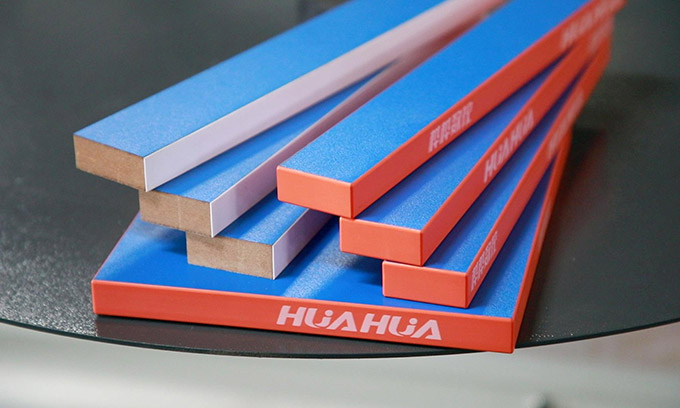
The immediate problem: messy edges, rising costs
Small workshops and midsize factories across Bangladesh often lose hours to sanding, trimming and rework when panel edges come out rough or mismatched. Those hours add up into delayed orders and higher labour costs. A focused fix — automated edge banding that matches cycle times — changes that calculation. Many shops pair a compact cnc furniture machine with an edge bander so panels arrive cut and ready to finish, not waiting for manual touch-up.

Where time and material slip away
Pain points are predictable: inconsistent glue application, wrong feed speed, uneven trimming and poor adhesive curing. These lead to sanded edges, extra labour and scrap. Material waste from oversized edgeband strips or ill-matched profiles costs more than the banding tape itself. Identify which step slows the line most — cutting, banding or post-processing — and target that first.
How targeted edge banding fixes throughput
Consistent application, precise trimming and controlled glue yield repeatable assemblies. Automatic banders hold feed rates and temperatures, so cycle times stabilise and finishing becomes predictable. Use moderate glue temperature for PVC and ABS; raise it slightly for veneer edges. Match edgeband width to panel thickness and set trimming blades to a single pass where possible to avoid extra operations. These are actions a workshop can implement immediately.

Real-world anchor and industry context
Major shows such as the China International Furniture Fair routinely demonstrate integrated lines where panels move from CNC cut to edge banding without manual handling — a clear model for scale-up. Observing those lines helps technicians specify tolerances and safety guards. For clear guidance on machinery that fits that model, suppliers of furniture manufacturing machines often provide layout advice and cycle-time estimates based on panel size and batch runs.
Common mistakes and quick checks
First, don’t rely on one banding speed for all materials. Test runs save hours: try three speeds and inspect the seam for bubbles and peeling. Second, neglecting dust extraction clogs glue rollers — check filters weekly. Third, ignoring edgeband quality leads to edge lifting within months; always inspect supplier batch consistency. Keep a simple log: material type, temperature, speed, and outcome. This record prevents repeated errors.
Alternatives and when to choose them
Manual banding suits tiny runs or irregular shapes but costs labour and consistency. Pre-glued edgeband is handy for repair work yet gives less control on long production runs. Laser edgebanding offers near-invisible joins but needs upfront investment and skilled operators. Choose automatic banding for steady batches and predictable demand; opt for manual or laser when runs are highly varied or finish demands are exceptional.
Where this leads the workshop
Fix the specific bottleneck—glue, feed, trimming—and you cut rework, shorten lead times and make delivery reliable. That clarity of purpose is what firms supplying integrated systems aim to deliver; seeing a coherent plan and a reliable machine link suppliers mention often helps a manager decide. For many manufacturers in the region, that practical coherence is what moves projects from late and costly to on-time and predictable with the right partner like HUAHUA CNC.