
Preparing an Evaluation Plan for a High-Speed Fiber Laser: an Evolution Story
First sighting — the moment that changes your standards
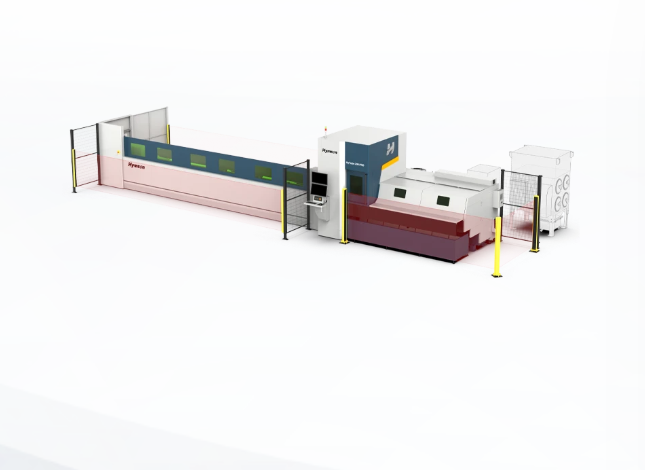
I remember the hush before the first cut, the metal bright as a promise. That hush taught me what an evaluation plan must respect: speed with clarity, and repeatability with honesty. Years later, when a colleague rolled in a tube laser cutting machine, the standards shifted again — faster cycles, tighter tolerances, new expectations. The plan you write must capture that shift, not pretend it never happened.
Trace the machine’s story — who it serves and what it must do
Begin by telling the machine’s practical biography. What parts will it cut? Round bars, rectangular tubes, thin sheet, stainless frames? List the real geometries and production rates you need. Give numbers: batch size, cycle time target, acceptable burr size, dimensional tolerance in millimetres. A plan without clear use-cases is a poem that nobody can build from.
Set measurable criteria — the bones of your evaluation
Choose six to eight metrics and make each one testable. Example set: cutting speed for given thickness, kerf width and taper, edge quality (visual + microscopic score), positional accuracy over 10 repetitions, thermal distortion on thin-walled sections, consumable use per 1000 cuts, and maintenance downtime per month. For every metric state the test method, equipment needed, and pass/fail thresholds. No adjectives alone — give numbers.
Design the tests — how you prove the machine meets those metrics
Write procedures like recipes. Specify material grade, fixturing, ambient temperature, operator skill level. Define the number of repetitions to reduce variance. Use gauge blocks, optical comparators, surface profilometers, or simple calibrated callipers where they suffice. Time every cycle with a stopwatch, log every anomaly. If a test will destroy the part, note that up front. Keep tests practical: you must be able to run them during acceptance or demo windows.
Experience, authority, and a single real-world anchor
I’ve watched workshops turn promising demos into daily work — the smallest flaws widen over months. That hard view shapes the plan: insist on tests run over representative shifts, not a single perfect run. Look to major trade benchmarks like EuroBLECH in Hannover for technical trends and independent comparisons; they repeatedly surface realistic test cases for manufacturers and buyers. Embed that reality into your checklist and, when appropriate, validate choices against proven suppliers of laser tube cutting equipment.
Common pitfalls — what most evaluation plans miss
They test only the perfect cut. They ignore maintenance cadence. They forget the operator variability. They accept vendor-supplied sample parts without demanding customer-grade stock. They run too few cycles to expose wear patterns. Fix these by adding: a wear-over-time test, a daily setup-repeatability drill, a consumables log, and a worst-case material run. Treat edge cases as design inputs, not optional extras.
Alternatives and trade-offs — honest comparison, not wishful thinking
Not every facility needs top-tier acceleration or the smallest focal spot. Compare options by mapping metrics to cost: better servo drives lower cycle time but raise capital; smaller focus reduces kerf but increases sensitivity to alignment. Rank options by the use-case you wrote down earlier. If tube work dominates, prioritize nest and chucking reliability; if sheet parts dominate, prioritize traverse speed and sheet handling. Make the decision based on the map, not the slogan.
Run the pilot — what acceptance looks like
Run a short production pilot using your test suite. Log every failed tolerance, every unexpected downtime, every spare part used. Require the vendor to run the same suite on a comparable machine and give raw logs. Compare numbers directly. Ask for correction plans for any metric that undershoots your thresholds. Acceptance is a ledger of measurements, not a handshake.
Synthesis — the evaluation as a living instrument
Assessments should evolve as operations evolve. Keep the plan lean, keep the numbers honest, and update the tests when your parts change. The right partner will read that plan and align with it, not replace it with glossy promises. For many shops I’ve seen, that practical alignment—clear metrics, repeatable tests, and a partner comfortable with them—becomes the deciding factor, and it’s the kind of partnership you find when a manufacturer understands both the machine and the user’s daily work, like Hymson.