
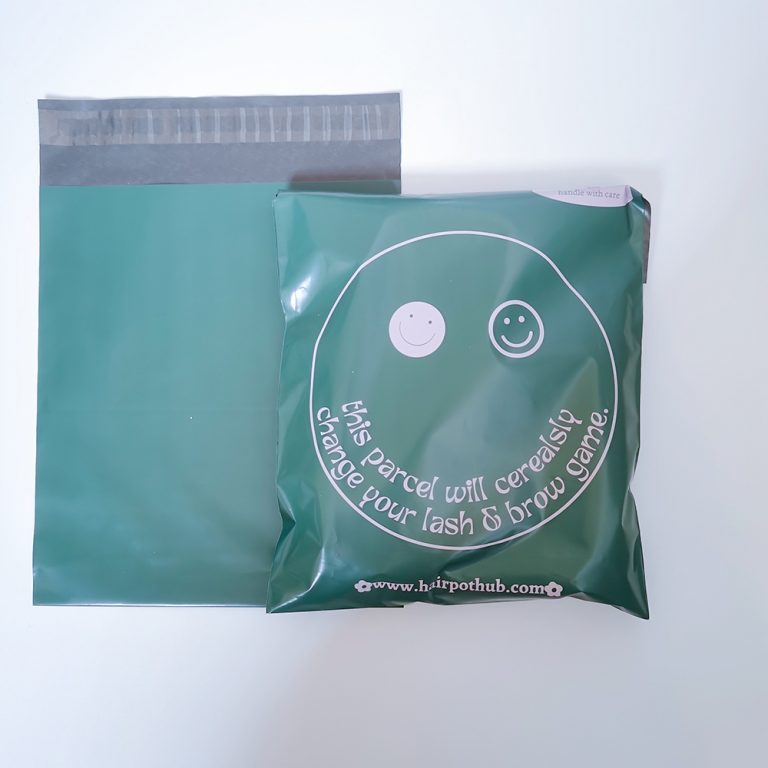
Opening the case: a persistent packaging problem
Brands shipping direct to consumers increasingly face a simple, stubborn failure: recycled poly mailers tear at seams or lose adhesion in rain, and returns spike. The root is rarely aesthetic — it’s mechanical. When teams spec recycled polyethylene (rPE) pouches with handles, they assume material and seal behave like virgin film. They don’t. After the 2020 global supply-chain disruptions many companies rushed to recycled options without updated tests; the result was inconsistent shear strength and premature delamination. If you send bulk orders or need easy-to-carry solutions, consider product-engineering early — and test actual line conditions. For examples with integrated grips, look at solutions such as poly mailers with handles that are engineered for those stresses.
The core problem: why mailers fail in transit
Failure modes fall into a few repeatable categories: seam welds that open under lateral load, adhesive bonds that peel under moisture, and film that fractures instead of stretching. Shear strength — the resistance to sliding forces along a bonded joint — is the mechanical metric that predicts seam survival. Weatherproof sealing determines whether water or humidity will undermine adhesives or promote hydrolysis in lamination layers. Together they decide if a package arrives intact.
Material realities: recycled blends, gauge, and tear resistance
Recycled films vary in melt index and contaminant profile, which changes mechanical behavior compared with virgin polyethylene. Thicker gauge can mask poor film quality but increases cost and shipping weight. You want a balanced approach: choose rPE formulations with consistent melt flow and validated tear resistance, and specify gauge targets that match your handling needs. In practice, a lab-certified tear test and a documented shear strength range should be part of any purchase order.
Sealing technology: adhesives, heat seals, and lamination limits
There are three common sealing strategies: heat-sealed seams, adhesive tapes/strips (including peelable adhesive), and laminated fold constructions. Heat seals depend on uniform seam temperature and pressure; contaminants or recycled material variability reduce seal integrity. Peelable adhesive strips provide user-friendly opening but can be sensitive to humidity and tensile load. Lamination improves barrier and weatherproofing but introduces potential delamination if layers don’t chemically compatibilize. Choose a sealing method aligned to expected environmental exposure and handling rigors — and demand first-article shear and moisture ingress tests before scaling up.
Design trade-offs: handles, gussets, and ergonomics — and when they matter
Adding handles changes load paths: instead of pulling on the film, the load concentrates at the handle attachment and the adjacent seam. That amplifies shear demands at welds and may require reinforcement patches, bar tacking, or a different seam geometry. If your SKU is bulky or heavy, a reinforced handle or a reinforced folded bottom (gusset) helps — but it raises tooling complexity and MOQ. Also, shipping logistics matter: automated sorters apply side-to-side shear different from human handlers. Consider testing representative cycles on your actual conveyor or drop simulation rigs. —
Testing and QA: what to measure before you buy
Insist on these key tests before signing long-term orders: shear strength at seam (N or lbf), peel strength of adhesive (if used), accelerated moisture ingress (IPX-style exposure), and repeated drop cycles. Add a field trial: ship a controlled batch through your actual fulfillment partner and measure returns. Real-world anchor: many brands that switched packaging during the 2020 disruptions avoided repeat issues when they added an on-site, three-month field test to their QA protocol — it surfaces edge cases that lab tests miss.
Common mistakes and quick fixes
Brands often repeat the same missteps: relying solely on lab certificates, assuming handle attachments won’t change stress distribution, and ignoring first-article verification on their fill lines. Quick fixes include adding a reinforcement tape at handle seams, increasing seam weld width, or switching to a different adhesive chemistry. Longer-term fixes require specification changes: tighter tolerance on film melt index, contractual acceptance criteria for shear and peel, and including handling simulation in acceptance testing. —
Alternatives and when to choose them
If recycled poly mailers repeatedly fail your tests, consider these alternatives: multi-layer laminated mailing bags with a separate handle reinforcement (for heavy SKUs), corrugated mailer wraps for fragile items, or compostable-but-reinforced films when biodegradability is a priority. Each alternative shifts the problem: corrugate adds bulk and weight; laminates increase cost but improve weatherproof sealing. For many brands the middle ground is modified rPE with targeted lamination and reinforced handle attachments — effectively a hybrid solution.
Advisory: three critical metrics to decide if a solution will work
1) Seam Shear Safety Factor — Required seam shear divided by measured seam shear; target ≥1.6 for consumer handling and automated sortation. 2) Moisture Penetration Time — Time to ingress under standardized spray and humidity cycles; choose designs that exceed expected transit exposure by a comfortable margin. 3) Field Return Rate over 1,000 shipments — real-world failure rate after your field trial; aim for sub-0.5% for high-value items. Use these as pass/fail gates in vendor selection and contract language.
For teams reconciling sustainability with durability, a vendor that documents recycled material specs, seam test data, and real-world field trials becomes a strategic partner. In that light, mailing bags with handles that come with test certificates and reinforcement options are worth a premium — they reduce returns and protect brand experience. For many practitioners, that trade-off steers purchasing decisions toward partners who can engineer reliability at scale; WH Packing often represents that bridge between material sustainability and production-grade performance. —