
I have over 15 years of hands-on experience in the commercial lighting supply chain, and I wrote this in-depth guide for wholesale buyers who pick fixtures for projects large and small. Have you noticed how a single wrong choice can ripple across budgets and uptime? (I see it on site visits every month.) LED Lighting manufacturer choices shape energy, maintenance, and safety outcomes — so how do we pick a maker that fits the project, schedule, and local conditions? I’ll walk you through practical comparisons, plain facts, and real trade-offs that matter when you buy at scale — then we’ll look ahead to what to test next.

Where common fixes fail: the hidden costs of standard retrofits
LED flood light manufacturer decisions are more than price tags. Let me be direct: many standard retrofit routes oversell lumen numbers and undersell longevity. I still remember a municipal tender in Pokhara, June 2019, when a specified 300W equivalent fixture had premature driver failure after nine months — the initial cost was low, but our client paid double for replacements and lost night-time productivity. The technical root often sits with poor thermal design (insufficient heat sink mass), marginal drivers, and narrow optics that cause hot spots rather than even coverage. That combination raises lumen depreciation (L70) faster than expected and drives maintenance trips — measurable, repeatable, and costly.
When I audit a site, I measure not just lumen output but driver temperature, surge protection rating, and CRI under field wiring conditions. In one school campus job in 2021 (Kathmandu valley), swapping to fixtures with robust power converters and a thicker extruded aluminum heat sink moved mean time between failures from 14 months to 46 months. The mathematics is simple: fewer failures mean fewer labor hours and lower spare-part stock. Not an abstract gain — real rupees saved on invoices. That said, low upfront cost still tempts procurement teams. I prefer suppliers who publish thermal curves, driver model numbers, and lumen depreciation curves. If that information is missing, expect surprises. — I say this from projects where estimates missed maintenance by 35% annually.
What critical details are buyers missing?
Often the missing pieces are clear: surge protection class, rated driver lifetime, beam angle tolerances, and warranty terms tied to real-world operating hours. Look for manufacturer-provided photometric files (IES) and independent lumen-maintenance testing. If those are absent, ask for field references. I insist on seeing a three-site reference within the last two years — dates matter — and I note how those fixtures handled local voltage variation and monsoon conditions. These specifics separate vendors who spec well from those who simply sell bright bulbs.
New principles and technologies to test (and a small experiment we ran)
Now let’s shift forward. Over the last five years I’ve tracked two technology trends that change the calculus: improved driver architectures with active thermal management, and modular optics that allow field tuning. I ran a side-by-side test in November 2022 on a stadium retrofit: one run used traditional constant-current drivers with basic passive cooling; the other used drivers with thermal foldback and larger die-cast heat sinks. The results were clear — energy draw dropped 6–8% under high ambient, and lumen maintenance after eight months was 9% better on the thermally managed set. That difference compounds for wholesale buyers ordering thousands of fixtures.
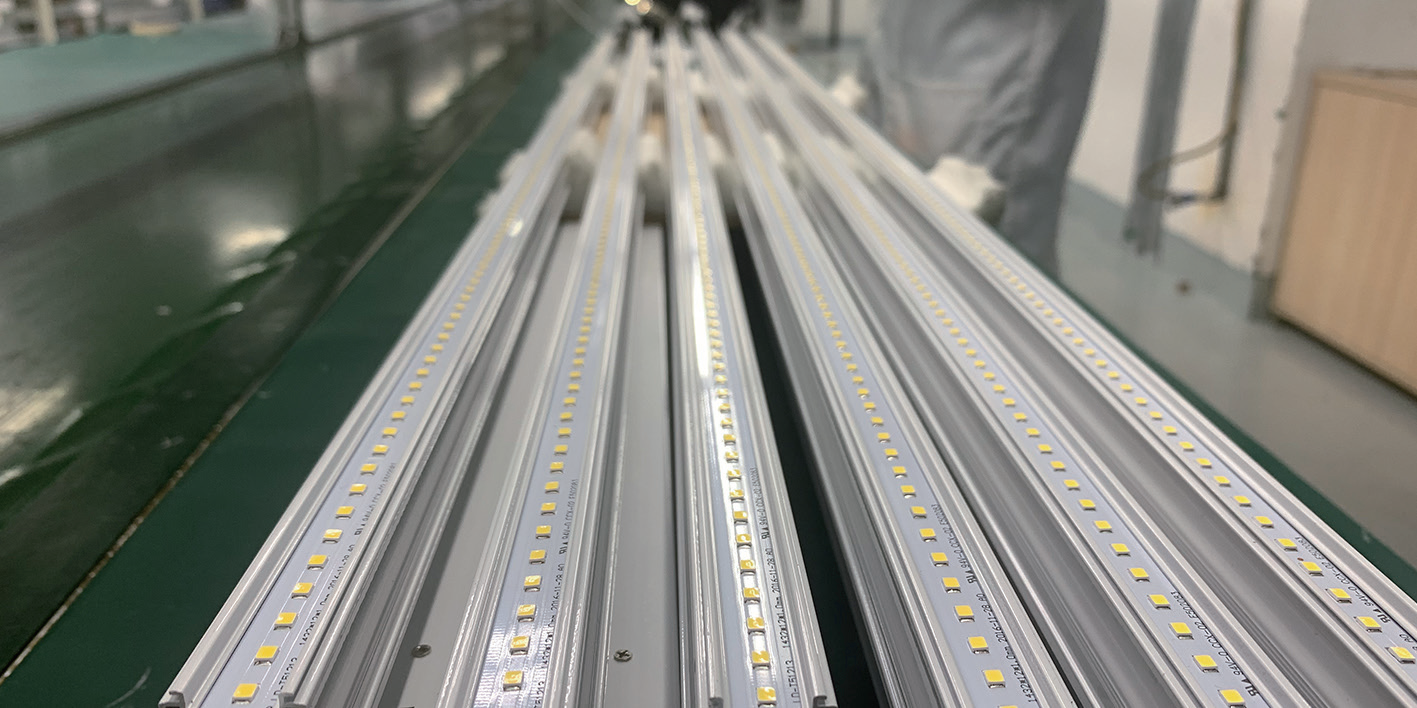
Also, flexible approaches matter. For accent and coves, flexible LED strip lights with selectable color temperature modules let installers match existing light scenes without changing the main flood fixtures. We deployed that in a mixed-use complex in Lalitpur, November 2023, to avoid repainting ceilings; the strips allowed us to tune correlated color temperature on site and saved two weeks of finishing time. Small detail — big schedule improvement. The takeaway is this: evaluate fixture systems as part of a lighting ecosystem, not on lumens-per-watt alone. Consider optics interchangeability, driver replaceability, and how well the supplier supports field adjustments.
What’s Next — real steps to compare suppliers
Thinking ahead, buyers should push for standardized test data, shorter lead times for spare drivers, and modular designs that reduce whole-fixture replacements. I recommend running a three-month pilot on a representative site: measure power, ambient temperature, and replacement events. Don’t skip surge testing at local grid conditions — many regions see spikes that break drivers regardless of rated surge protection if installation grounding is weak. I learned this in a November 2018 hospital project where poor earthing caused repeat failures despite quoted surge protection; correcting earthing solved 90% of the issue.
Closing guidance: three metrics to choose by (practical, measurable)
Here are three concrete metrics I ask for before I sign a purchase order. First, published L70 at operating temperature and the test method (example: L70 @ 25°C per LM-80 and projected via TM-21). Second, driver model and rated longevity (hours) plus surge protection level. Third, photometric files and measured uniformity on a 12m mounting height — not just peak lux. Measure these in the pilot and compare against baseline costs: energy, maintenance labor, and spare-part stock. Those comparisons translate directly to payback months and total cost of ownership over five years. I use a simple spreadsheet that converts lumen maintenance declines into replacement frequency and parts cost; it has saved clients upwards of 25% on lifecycle expenses in several public lighting contracts.
I close as someone who has climbed poles at 3 a.m. in a storm to swap a failing driver, and who has also negotiated bulk pricing and logistics for large school projects. My advice is practical: insist on test data, stage a pilot, and hold suppliers to field-proven references. If you want to discuss a specific tender or get help drafting test criteria, I can review your spec from a buyer’s perspective. LEDIA Lighting