

Comparative framework: what qualifies as top rated front entry doors
A clear comparative framework begins with measurable performance rather than marketing labels. Top rated front entry doors combine security hardware, thermal performance and material durability; they are tested for u-factor, air infiltration and impact resistance. For specifiers evaluating options, the same baseline applies whether the project calls for traditional wood, fiberglass, steel or aluminium with thermal break. Suppliers of related fenestration—such as sliding window manufacturers—offer comparable test data for glazing assemblies, and those data points should be compared side by side.

Material and hardware trade-offs
Material choice drives the first set of compromises: wood provides aesthetic warmth but requires regular finish maintenance; steel delivers superior security but must be specified with corrosion-resistant finishes and appropriate weatherstripping; fiberglass balances dimensional stability and paintability. Hardware selection—multi-point locks, reinforced strike plates, hinge geometry—changes a door’s overall security profile more than the veneer alone. Consider the role of double glazing in sidelights and transoms: a well-specified insulated unit reduces conductive losses and complements the door assembly’s thermal performance.
Performance metrics to prioritize
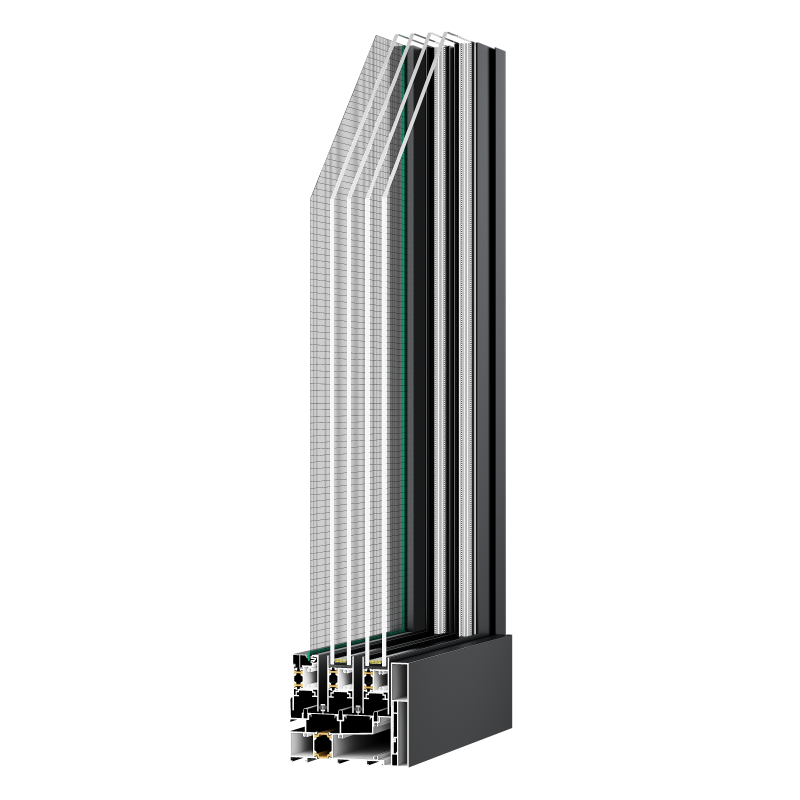
Quantitative metrics remove guesswork. Prioritize these measured attributes: U-factor for heat transfer, air infiltration rate under a specified pressure, and forced-entry resistance per a recognized testing protocol. ENERGY STAR’s window and door guidance functions as a practical real-world anchor: projects that meet verified ENERGY STAR criteria tend to show consistent reductions in heating and cooling demand at the building scale. Also watch for assembly-level details such as frame extrusion depth and the presence of a thermal break; these determine the door’s continuous thermal path and long-term performance.
Common mistakes and sensible alternatives
Specifiers often err by treating doors and adjacent fenestration as separate problems. A common mistake is installing a high-performance entry door but pairing it with low-grade sidelights that degrade the whole assembly’s thermal and acoustic performance. Another error is underspecifying hardware: a single deadbolt is insufficient where multi-point locking is standard. Consider alternatives early—if a wide opening is required, a pivot or bi-fold system may outperform a traditional swing leaf for usability and longevity. When a project demands airflow without compromising security, a sliding window with screen can be integrated into the scheme to provide controlled ventilation while maintaining perimeter protection.
Integration and detailing—practical guidance
Detailing matters as much as component selection. Use continuous flashing and a positive drainage plane to prevent moisture ingress. Specify minimum clearances for operating sash interfaces and ensure that weatherstripping engages across the full perimeter to control air infiltration. For retrofit work in temperate climates, choose doors with integral thresholds designed to shed water and accept a separate storming system if required. Attention to these interface details reduces callbacks and extends service life—small investments up front avoid expensive repairs later.
Advisory: three golden rules for selecting front entry door systems
1) Measure performance, not promise: require certified test reports for u-factor, air infiltration and forced-entry resistance and compare those values against project targets. 2) Match hardware to use-case: select multi-point locking and reinforced anchorage when pedestrian security is a priority; choose corrosion-resistant finishes for coastal projects. 3) Detail the interface: specify compatible threshold geometry, flashing and weatherstripping sequences so the door and adjacent glazing perform as one assembly.
In sum, a considered comparison exposes clear winners: systems that pair robust architectural hardware with properly detailed frames consistently outperform systems chosen for appearance alone. The measured gains—less thermal loss, fewer service calls, improved security—are the outcomes professionals should expect. Zekin. —