
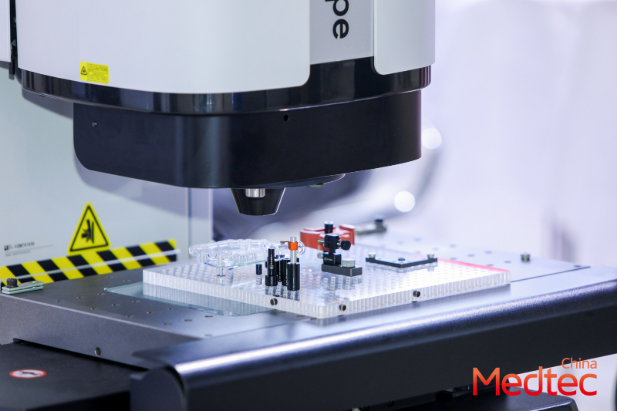
The problem in hardened cleanroom overmolding
Delamination and mechanical fatigue quietly erode product reliability in medical assemblies long before they reach the clinic. In hardened cleanroom overmolding operations this failure often starts at the material interface — poor substrate adhesion, incompatible polymers, or uncontrolled cure shrinkage. Attendees at Medtec China 2026 and manufacturers across Shenzhen report recurring recalls tied to these root issues, a reminder that local production hubs face the same design-to-process gaps as global suppliers. The consequence is expensive rework, regulatory scrutiny from NMPA updates, and frustrated supply chains focused on China medical device integration into export lines.
Why delamination and fatigue happen
Three technical drivers dominate: surface contamination in the cleanroom, mismatched mechanical properties, and thermal or mechanical cycling during use. Overmolding materials such as silicone or polyurethane may bond well to one alloy but fail on another substrate without proper surface activation. Thermal expansion mismatch creates shear at the interface; repeated loading then produces fatigue cracks that propagate into delamination. Cleanroom class and particle control (ISO 14644) matter because microscopic contamination blocks adhesive wetting — the interface fails before the part leaves tooling. It is not mystical — it is chemistry, physics and process control meeting at a weak seam.
Practical controls and process adjustments
Fixing these failures requires targeted interventions across design, materials and factory practice. Focus on these concrete steps:- Surface preparation: plasma or corona treatment, followed by controlled priming to improve substrate adhesion.- Material pairing: specify durometer ranges and elongation limits for overmold and substrate so mechanical fatigue thresholds align.- Cure control: optimize molding tooling and cure cycles to minimize residual stress and shrinkage.- Environmental control: maintain ISO 14644 cleanroom conditions during assembly to prevent particulate entrapment.- Validation: include accelerated life testing that replicates expected bending cycles and temperature swings.Implementing in-process checks — peel testing, shear tests, and simple nondestructive inspection — prevents batch-level surprises. A practical note — tool alignment and gate placement are low-cost adjustments that often yield high reliability gains.
Common mistakes and alternatives
Manufacturers repeat avoidable errors: relying on supplier data without in-house verification; using adhesives as a band-aid over a poorly engineered interface; or skipping iterations in prototype tooling. Alternatives worth considering are overmold redesigns that change the load path, selective potting for non-structural parts, or hybrid solutions that combine mechanical interlocks with chemical bonding. Each choice trades off volume efficiency, cycle time, and regulatory documentation for durability. When switching strategies, document the change control, because regulators — and customers — will ask for rationale and evidence.
Three critical metrics to evaluate overmolding strategies
Use these golden rules when selecting process or materials so decisions map to measurable outcomes:1) Interface strength: specify minimum peel and shear values from test coupons that represent the production substrate and overmold material. 2) Fatigue life: require a defined cycle count at representative strain amplitudes (report expected mean cycles to failure) rather than vague “robustness” claims. 3) Process reproducibility: demand CPk or similar statistical process capability metrics for cure temperature, injection pressure, and particulate counts in the cleanroom. Together these metrics convert subjective supplier promises into quantifiable acceptance criteria and reduce downstream surprises.
Final evaluation and the role of events and networks
Attendance at industry events and engagement with regional hubs like Shenzhen provide actionable insight into tooling vendors, material innovations, and regulatory practice — tangible benefits for teams refining overmolding infrastructure. For manufacturers aiming to prevent delamination and mechanical fatigue, empirical metrics and careful process design win over assumptions every time. Medtec. Worth the effort.