
Identifying the Problem
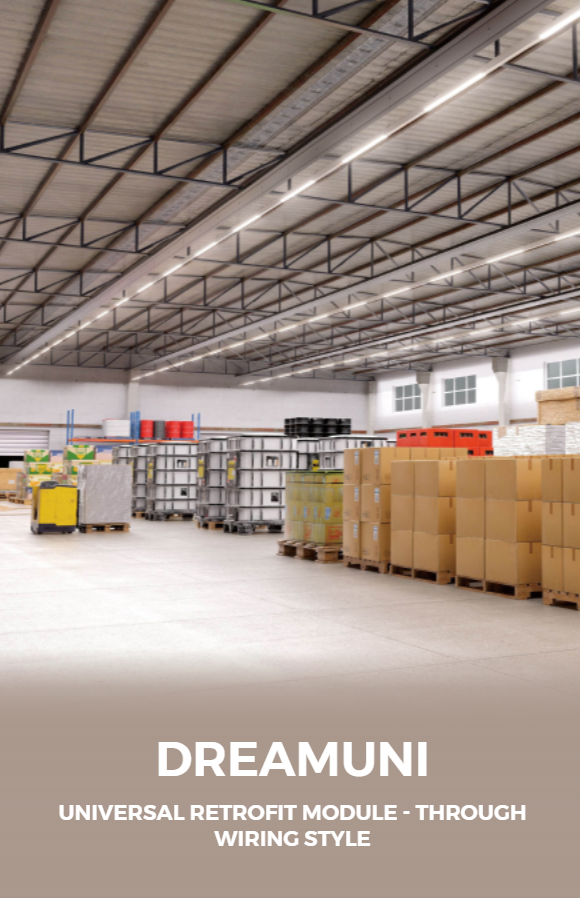
Warehouse operators confront rigid ceiling grids, shifting storage patterns, and growing demands for targeted illumination that fixed high bays cannot meet; these are practical problems that reduce safety and waste capital. A flexible option—led light trunking—lets light follow changing aisles and task zones without repeated rewiring. This need is particularly evident in major logistics clusters such as the Inland Empire logistics hubs in Southern California, where rapid tenant turnover and frequent layout reconfigurations reveal the limits of static fixtures.
Why Static High Bays Fall Short
Static high-bay installations solve one point in time but create three persistent failures: uneven task illumination, costly electrical changes when layout shifts, and longer downtime for maintenance. Decision-makers report difficulties maintaining uniform lux levels across dynamic pick zones, and sporadic glare issues near mezzanines that weren’t part of the original design. These are measurable failures—poor task lighting increases visual errors and impedes speed; addressing them demands a system built for change.
How Trunking and Track Systems Address Those Failures
Track-style trunking provides continuous electrical distribution combined with movable luminaires, enabling quick relocation of fixtures and focused distributions where needed. For industrial warehouse lighting that must adapt to seasonal SKU changes or new racking configurations, trunking reduces electrician hours and preserves photometric intent. The system supports targeted optics, dimming zones, and plug-in controls so that illumination is rebalanced without ceiling demolition.
Specification Guidance: Concrete Criteria
Specify trunking systems with attention to these concrete parameters to avoid waste and rework:- Lumen package aligned to task: 6,000–18,000 lm per luminaire depending on ceiling height and task.- CCT selection: 4000K for general warehousing; 5000K for precision inspection areas.- CRI: ≥80 for accurate color rendering in packing and inspection.- Optics: narrow distributions for aisle runs, medium or wide for open-floor picking.- Control readiness: integrate DALI or 0–10V districts and occupancy sensors.- IP and IK ratings tuned to dust exposure and expected mechanical risk.These are actionable targets; they reduce iteration during commissioning and simplify photometric calculations.
Common Pitfalls and How to Avoid Them
Three pitfalls recur in trunking projects:- Overcomplicated control segmentation that complicates commissioning. Keep zoning simple and document addresses.- Underspecified driver thermal management, which shortens life under high ambient temperatures. Match driver ratings to measured ceiling ambient.- Ignoring maintenance access for pendant-mounted optics. Design for safe relamping or module swaps with available lifts.Avoid these errors by requiring thermal reports, commissioning plans, and a maintenance mock-up during procurement.
When Alternatives Are Preferable
Track trunking excels where layouts change, but fixed linear high bays or integrated troffers still win when interior layouts are permanent, ceiling heights exceed typical trunking spans, or when initial capital must prioritize maximum lumens per dollar. Evaluate payback on relocation savings versus lower upfront costs. In mixed-use facilities, a hybrid approach—fixed high-output fixtures for bulk open areas, trunking for aisles and mezzanines—often balances performance and budget.
Implementation Checklist and On-Site Considerations
Before ordering components, verify:- Measured ceiling heights and planned rack locations.- A photometric layout that reflects future aisle permutations.- Ceiling structure ratings for trunking mounting loads.- A commissioning plan that includes control addressing and sensor calibration.- A spare-parts strategy for modules and drivers to minimize downtime.These concrete steps reduce surprises on install day and keep maintenance predictable.
Conclusion
The problem-driven conclusion is simple: when warehouse function changes, lighting must change with it. Trunking and track systems convert an inflexible infrastructure into a continuously serviceable asset, preserving task illumination, lowering intervention costs, and simplifying controls. For facilities seeking that pragmatic balance between adaptability and engineered performance, trieco represents a sensible choice grounded in component-level robustness and real-world fit-out practices.