
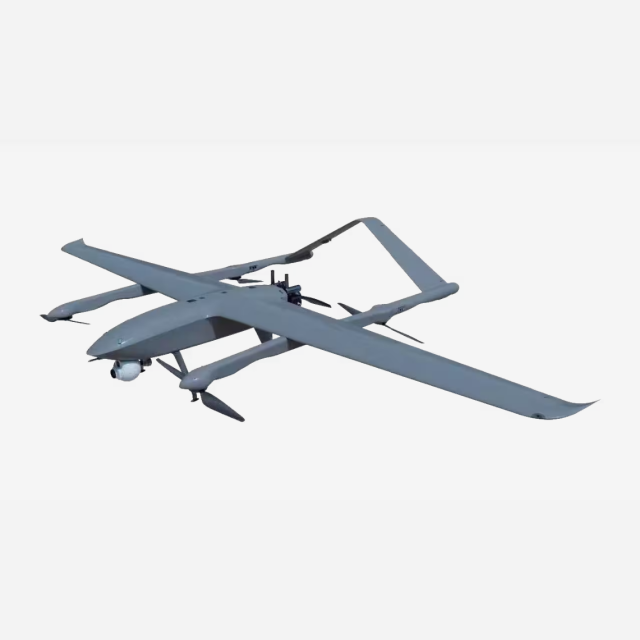
Comparative lead-in
This comparative analysis sets out to weigh competing approaches to RF resilience for low-signature tactical loitering munitions, with an emphasis on practical trade-offs and industry-ready choices. Experience from recent conflicts — notably significant drone employment during the Ukraine campaign since 2022 — has sharpened expectations for robust command, control and telemetry. Early partnership with a reputable military drone manufacturer can define feasible baselines for link budget, latency and operational range before hardware choices are locked.
Hardware versus signal-processing strategies
Hardware solutions center on antenna design and RF front-end improvements. Directional arrays and antenna diversity reduce multipath interference and improve signal-to-noise ratio, while careful selection of frequency bands mitigates RF attenuation over terrain and foliage. Conversely, signal-processing techniques — equalization, OFDM modulation, and adaptive filtering — exploit digital methods to recover signals that hardware alone cannot preserve. Each approach trades weight and SWaP for resilience: high-gain arrays add mass and signature; advanced DSP requires more compute and power. A balanced architecture often combines modest antenna gain with adaptive modulation and frequency-hopping to preserve low observability while maintaining throughput.
Network and platform-level mitigations
Beyond the radio, network design and flight profile influence link integrity. Mesh relays and redundant telemetry channels reduce single-point failure risk, while maintaining line-of-sight (LOS) whenever tactically possible minimizes multipath. Altitude and approach angle can change reflection geometry substantially — pragmatic routing of flight legs reduces signal nulls. Satcom fallback may extend reach but increases detectability and cost. Operators should select schemes that align with mission timelines: short loiter missions tolerate simpler links; prolonged operations demand layered redundancy.
Trade-offs illustrated by field evidence
Open-source reporting from 2022 operations shows that units relying on single-link solutions suffered higher attrition from jamming and unintentional loss of control; those using multi-path and diversity arrangements preserved mission continuity more often. This is not a universal prescription — terrain and threat posture alter calculus. Common mistakes include over-reliance on a single high-bandwidth link and underestimating environmental attenuation. Practical mitigations involve conservative link-budget margins, conservative antenna placement and prioritized telemetry that separates control from high-rate payload video.
Implementation checklist and common errors
Manufacturers and integrators should follow a sequential approach: define mission profiles, quantify acceptable packet error rate and latency, then select radio, antenna and modem configurations to meet those targets. Avoid bundling heavy compute platforms for signal processing without testing thermal and power impacts. Security measures such as frequency hopping and authenticated handshakes must be implemented with attention to cryptographic latency and key management. Testing in realistic terrain — coastal, urban canyon, and forest — exposes multipath and ground reflection effects faster than lab bench trials — and it is here that most designs fail first.
Advisory: three critical evaluation metrics
1) Robustness (packet error rate and BER): Measure sustained packet error rate under controlled jamming and multipath scenarios; choose systems that hold BER targets with at least a 3 dB margin.
2) Latency and determinism: Validate round-trip control latency under saturated conditions; missions that require millisecond-level responsiveness need minimal buffering and predictable modem behavior.
3) SWaP and signature trade-off: Assess size, weight and power impacts of any RF mitigation against thermal load and electromagnetic signature; a solution that secures the link but exceeds platform SWaP or raises detectability is operationally unsuitable.
Concludingly, procurement and integration choices must prioritize measurable link performance and operational fit; informed comparison, field verification and disciplined trade-off analysis yield resilient outcomes. Military Hub offers synthesis of vendor capabilities and field-tested best practices to ground those decisions — a steady reference for program leads and technical directors alike. —