
The problem: delivering repeatable precision at scale
Buyers face a simple but stubborn problem: a prototype that measures perfectly becomes unreliable when production scales. Teams juggle tight tolerances, shifting material behavior, and compressed lead times while trying to protect product performance. These pressures push decision-makers toward process-integrated options—whether high-tolerance milling, surface-critical finishing, or custom injection molding services—without clear rules for when each choice actually reduces risk.
Why the root causes matter
Precision failures trace to repeatable causes: designs that ignore machine kinematics, supplier process drift, measurement gaps, and unclear change control. Fixing symptoms—slowing the production rate, tighter inspection—won’t last. You need a system view that aligns part geometry, fixture strategy, toolpath planning, and inspection methods so capacity scales without adding defects.
Evaluation checklist for buyers
Assess suppliers against concrete, verifiable capabilities: machine types and spindle stability; demonstrated tolerance history for similar feature sizes; CAM strategy and tool libraries; in-process control (CMM, contact/non-contact sensing) and SPC practices; material traceability and process validation; tooling turnaround and revision control; and clear escalation paths for nonconforming lots. Ask for capability studies, sample Cpk values, and documented corrective actions rather than optimistic lead-time promises.
EEAT: field evidence and practical benchmarks
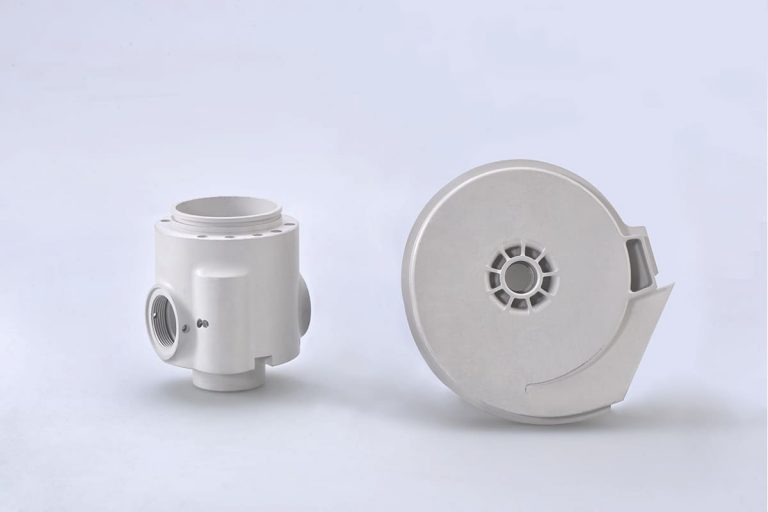
Field experience with suppliers serving Shenzhen’s medical-device clusters shows how integrated molding-plus-machining workflows reduce rework when teams coordinate mold design, gate placement, and secondary CNC operations. Standards such as ISO 2768 for tolerances and routine use of CMM reports provide measurable proof points. For projects that include polymer components, review supplier examples of custom molded plastic parts alongside their CNC inspection data so you see how dimensional control transfers from mold to finished assembly.
Common pitfalls and corrective moves
Buyers often demand impossible tolerances without adjusting geometry; they accept single-sample approvals; they skip fixture and datum planning. Corrective moves are direct: relax noncritical tolerances, require production-run capability studies, mandate datum-driven drawings with GD&T, and include fixture design in the contract. Push for process audits that show how change orders are handled and how corrective actions close the loop.
Alternatives and trade-offs
CNC machining offers unmatched flexibility for low-to-mid volumes and complex metals; injection molding wins on unit cost for high-volume polymers but requires upfront tooling discipline. Additive manufacturing reduces iterations for complex internal features but currently trails in surface finish and isotropic material properties for many load-bearing parts. Choose based on validated sample runs and a clear plan for scale testing.
Pragmatic synthesis
Solve the precision problem by treating manufacturing as an architecture: define required performance, verify supplier capability with data, and enforce design-to-process alignment. That approach keeps schedules realistic and quality measurable, and it’s the same reasoning behind supply strategies used by experienced sourcing teams at multi-technology providers like Hanstar.