
Problem statement: the procurement dilemma
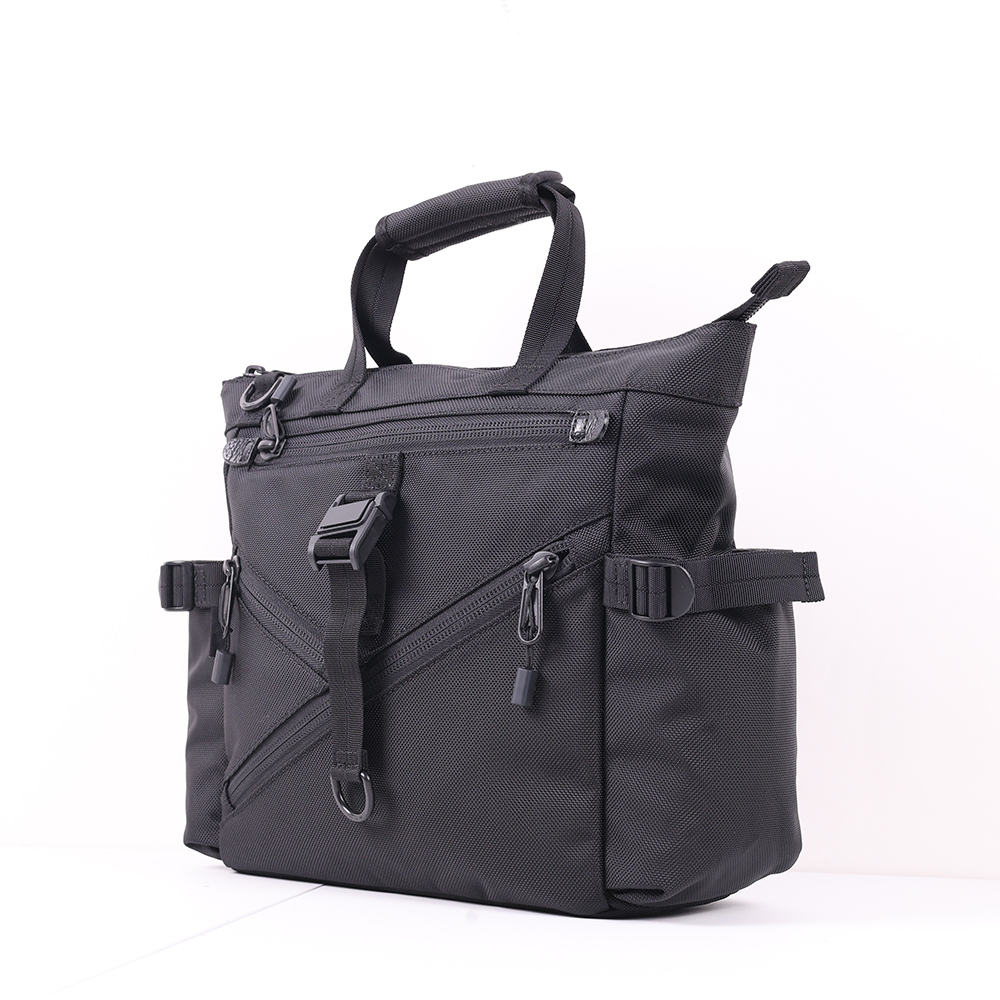
Photographers require equipment carriers that protect expensive bodies and lenses, yet procurement often reduces the selection to cheapest price or fastest delivery. This problem is evident when a specification sheet demands abrasion resistance, precise foam cuts and watertight zippers but a procurement team prioritises unit cost; the result is a product that fails in the field. A practical starting point is to inspect a representative camera gear bag to see where compromises appear: padding thickness, zipper brand, seam reinforcement and material denier reveal what was traded for price or lead-time.
Root causes of failure in sourcing
The failures trace to three predictable causes: unclear specifications, underestimated manufacturing complexity, and insufficient inspection protocols. Vague phrases such as “sturdy foam” or “durable fabric” invite inconsistent outcomes. Manufacturers require precise tolerances: foam density in kg/m³, stitch counts per inch, zipper model (for example, established manufacturers such as YKK), and fabric denier with the correct coating. Misjudging tooling time or sample cycles compresses lead time and forces rushed production that sacrifices quality.
Quantifiable trade-offs and practical thresholds
Decisions become manageable when framed as measurable trade-offs. Cost: for a mid-range padded camera bag, expect a per-unit manufacturing cost that reflects materials and labor; extremely low quotes frequently omit rigorous assembly steps. Lead time: prototype to bulk typically spans 6–12 weeks if sampling, approvals and minor tooling are required; urgent turns under four weeks require added cost and risk. Quality: require objective tests — foam compression recovery ≥50% after 1,000 cycles, seam pull strength meeting defined Newton values, and water-resistance rating (e.g., 1,000 mm hydrostatic head for treated fabrics) — and list these metrics in the spec sheet. When metrics are explicit, negotiation focuses on where the client will accept variance and what premium shortens lead time.
Common procurement mistakes to avoid
Do not accept verbal assurances in place of documented test results. Do not assume that a familiar material name guarantees consistent performance across batches; suppliers sometimes source subgrades. Do not ignore packaging and transit stresses — compression during shipping can permanently deform foam inserts if protective packaging is inadequate. Finally, do not omit a pre-shipment inspection plan with defined acceptance criteria and photographic records; without this, disputes become subjective and costly.
EEAT demonstration and field validation
Experience comes from repeated specification reviews and prototype cycles; expertise comes from translating field performance into measurable tests. Professional evaluators who exhibit at major industry gatherings observe recurring patterns — for example, products shown at Photokina in Cologne often reveal whether a design succeeds in real-use scenarios — and that practical scrutiny informs robust sourcing choices. Field tests that follow recognised methods and present objective data strengthen authoritativeness; a tested exemplar such as the Photography Gear Bag illustrates how clear specs, controlled sampling and formal inspection produce predictable outcomes.

Alternatives and when to choose them
Consider modular inserts if flexibility matters; they reduce the need for full-bag redesigns and allow separate sourcing of shells and inserts. Hard cases are appropriate when maximum impact protection and seal integrity outweigh portability. For rapid deployment needs, accept higher per-unit costs for local production with lower minimum order quantities, but reserve that route for short runs; for stable models, invest in tooling and longer lead times to reduce per-unit cost and improve consistency.
Synthesis: an operational prescription
Define exact testable specifications, plan sample cycles with time buffers, require third-party or photographic evidence of pre-shipment inspections, and set clear acceptance thresholds for foam, seams and water resistance. When these steps are followed the procurement gap narrows: reliable performance, predictable lead time and defensible cost emerge from disciplined sourcing. Practical implementations of this approach are visible among manufacturers that couple detailed technical documentation with consistent production oversight, as embodied by ChangRong, which aligns specification clarity with repeatable manufacture and measured outcomes.