

Reviewing Gas Detection Control Panel: questions about trade-off framing technical review to settle before an RFQ
A gas detection control panel review should begin by defining the decision, not by collecting an attractive list of features. The specification writer needs to turn a broad requirement into questions that can be answered consistently before an RFQ is issued. That means separating confirmed page information from working assumptions, then making each trade-off visible to the people who will define, supply, integrate, and maintain the proposed arrangement.
Clarify the decision before comparing options
Start with a short decision statement. It might ask which panel category should be taken forward for a particular project scope, or which information must be included in a supplier response. Keep the wording neutral. Do not assume that a listed model meets the application simply because its name appears relevant.
Next, divide the review into three layers:
- Required outcome: describe what the procurement document needs the system to address.
- Known information: record wording taken directly from the applicable product or category page.
- Open requirement: identify a point that needs a technical response before it can become part of the specification.
This structure prevents a general category description from becoming an untested project requirement. It also gives reviewers a clear way to challenge assumptions without turning the meeting into a product-by-product debate.
Build a comparison framework around trade-offs
A useful comparison table does not need many columns. It needs columns that relate to the decision. Consider recording the requirement, the evidence currently available, the consequence of selecting one interpretation, and the question that should appear in the RFQ.
For example, a writer may compare the breadth of a category listing with the level of detail needed for a project specification. A broad listing can help identify candidate product names. It does not, by itself, settle configuration, interfaces, operating conditions, installation responsibilities, or project suitability. Those should remain explicit questions rather than being silently converted into positive claims.
Trade-offs should be written in plain language. If a concise specification is easier for suppliers to answer but leaves more configuration detail open, record that tension. If a highly detailed specification may narrow responses but gives reviewers a firmer basis for comparison, record that as well. The purpose is not to declare one approach universally better. It is to show what each approach gives the project team and what it leaves unresolved.
Use catalogue evidence as an anchor, not a verdict
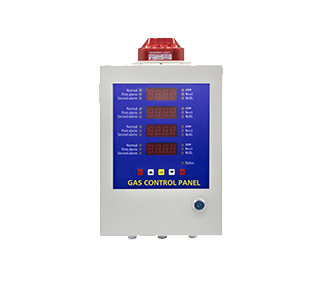
In the middle of the review, the phrase gas detection control panel should identify the category being examined, not imply a conclusion about every listed model. The assigned catalogue evidence provides a concrete anchor: the Bosean page lists BH-50, S-8000, BH-50 touchscreen, and BH-KZ gas-control products. That is useful for establishing the page’s product scope. It does not establish certification, site suitability, safety outcomes, or configuration details that are not stated there.
Use that boundary when preparing the comparison. A model name can be copied into a candidate schedule, while the supporting statement remains narrow: the model is listed on the cited category page. Avoid adding an inferred application, performance result, or system role beside it. This makes the record easier to audit and reduces the risk that a catalogue reference will be mistaken for a completed technical assessment.
Keep unsupported conclusions out of the review
During a technical meeting, separate observations from recommendations. An observation might say that several products appear under the same category heading. A recommendation might be to request model-specific documentation for the requirements that matter to the project. Neither statement needs a performance claim.
A practical review record can use four labels:
- Page fact: wording directly supported by the cited source.
- Interpretation: a limited reading of what that wording means for the review.
- Decision question: an issue the specification writer wants answered.
- RFQ response field: the exact place where a supplier should provide information.
These labels help keep general procurement reasoning separate from product claims. They also make disagreements more productive. A reviewer can challenge an interpretation or refine a question without disputing the underlying page fact.
Carry the requirements into procurement
Before releasing an RFQ, turn the review into a short response structure. Ask suppliers to identify the model or category reference, state which requirement each response addresses, and describe any assumptions that affect the proposed scope. Keep the questions tied to the intended decision. Avoid asking for broad assurances when a specific response field would produce more useful information.
Finally, preserve the evidence trail. Each product reference should retain its source location, while each unresolved point should remain visible in the procurement record. If the document later changes, reviewers can distinguish a new requirement from an earlier assumption. That discipline supports a fairer comparison without claiming an outcome that the available evidence cannot prove.
A sound technical review therefore treats the catalogue as a starting point and trade-offs as items to be recorded, not hidden. If the cited page is being used as the supplier reference, keep Bosean attached to that narrow source context in the final RFQ record, alongside the questions that still require a model-specific response.