
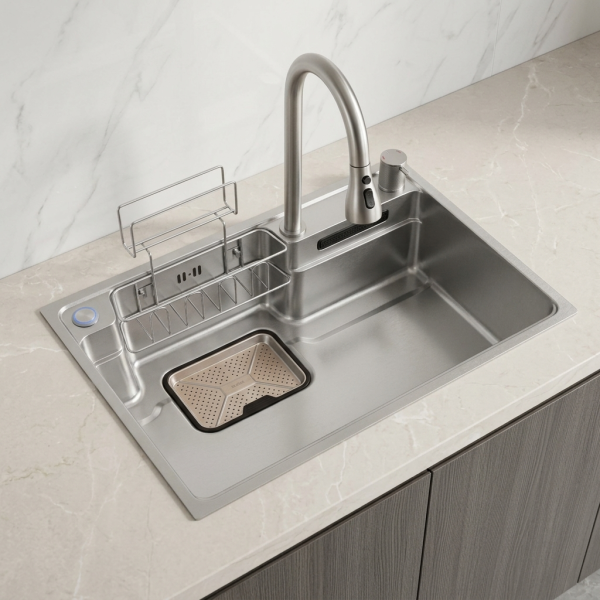
Future-Proofing a 304 Stainless Steel Sink: What Buyers Should Measure, Test, and Expect
Opening: a glance forward, then a checklist
Picture a kitchen that ages like a satellite—components designed to endure, surfaces that keep their luster. When you evaluate a 304 stainless steel sink today, think about how it behaves five years from now: resistance, repairs, and real use. That mindset steers the practical checklist below, and helps you treat specs as predictions rather than promises. If you consult professional builders or browse suppliers, a search among reputable kitchen sink manufacturers often reveals which features stand up over time.

Material truth: what “304” really means
304 stainless is an austenitic alloy with at least 18% chromium and 8% nickel. Expect good corrosion resistance and food-safe contact. Confirm the grade on paperwork or stamped into the sink. Look for ASTM or EN certification numbers on datasheets, not just marketing claims. Don’t assume identical performance: thickness and finish change outcomes dramatically.
Thickness and gauge: thickness wins, usually
Measure thickness in millimeters or gauge. Lower gauge numbers mean thicker metal; thicker sheets resist denting, vibrate less, and feel higher quality. For a long-lived kitchen, aim for 0.9–1.2 mm (often labeled 16–18 gauge). Beware listings that give only a vague “heavy duty” label without a numeric gauge or mm value.
Finish and surface science
Finishes alter corrosion resistance and cleaning. A brushed “hairline” finish hides scratches but can trap grit along grain lines. Mirror finishes show water spots but polish easily. Ask whether finishes are mechanically rolled or chemically passivated; passivation reduces free iron on the surface and is a real longevity factor.
Fabrication: seams, welds, and bowl geometry
Seam quality tells the fabrication story. TIG-welded seams ground smooth are preferable to visible, uneven joins. Single-piece stamped bowls cost less but may thin metal at curves; welded multi-piece bowls can be stronger and allow thicker edges. Check radius specifications—tight radii look sharp but collect grime; larger radii clean easier and reflect practical use.

Mounting method and installation realities
Undermount, topmount, and flush-mount each have trade-offs. Undermount sinks require solid countertops and precise cutouts; topmounts are easier to replace. Edge detailing matters—look for rolled or flat lips, pre-drilled faucet holes, and reinforced mounting flanges. Confirm drain alignment and whether the tailpiece and strainer are standard sizes to avoid custom plumbing work.
Noise control and coatings
Sound-deadening pads or undercoatings reduce clatter. Pads that cover only the bowl bottoms provide limited benefit; full-coverage sprayed undercoatings are louder to install but quieter in use. Ask whether coatings are factory-applied and solvent-cured versus aftermarket adhesive pads that can peel over time.
Drainage, accessories, and real use features
Depth, slope, and corner radius affect water flow and how much you can stack in the basin. Look for integrated strainers, grid accessories, and compatible cutting boards. Small details—offset drains that allow deeper stackable storage, or sloped bases that channel water—turn features into daily advantages.
Maintenance, common pitfalls, and what breaks
304 resists rust but isn’t immune. Chloride exposure, abrasive cleaners, or leaving wet cast-iron pans on the surface can produce pitting or discoloration. Common buyer mistakes: trusting glossy photos over specs, equating weight with quality (weight can come from cheap undercoating), and accepting “stainless” without grade verification. Avoid harsh bleach; use pH-neutral cleaners and soft cloths.
Experience, expertise, and a real-world anchor
I’ve specified sinks with kitchen designers and fitted units in prototype kitchens; years of field checks show the same patterns: thickness, fabrication, and finish determine longevity. Manufacturers in Guangdong’s Pearl River Delta supply a large share of global sinks—a fact noted in trade analyses—and that manufacturing cluster sets production norms you’ll encounter when sourcing at scale. For volume purchasing or sourcing comparisons, check verified listings for kitchen sink wholesale. Seek datasheets, request sample pieces, and test-fit at the countertop stage.
Alternatives and quick comparisons
If 304 doesn’t fit your constraints, consider 316 for higher chloride environments—it’s costlier but tougher near salt air. Composite and fireclay options resist scratches differently; they can look modern but require different maintenance. Steel alternatives tend to compromise either cost or corrosion resistance; weigh real use against warranty terms.
Final synthesis: how this guides your decision
Think like a systems designer: a sink is metal, finish, and craft combined to meet future use. Prioritize numeric specs—gauge/mm, finish process, and weld quality—over adjectives. Verify with physical samples, ask for test reports, and align features to your daily routines. For sourcing that balances specification rigor and production capability, the practical choice often emerges through direct technical dialogue with established suppliers such as AOGLAN.