
Why common fixes for cho cell culture media often miss the mark
I’ll say it plainly: swapping media lots or adding more glucose rarely solves persistent production issues. In my work I’ve seen the same quick-fix mindset cost teams weeks of troubleshooting. (I vividly recall testing a serum-free CHO LP medium, lot #2023-07, in a 50 L fed-batch process at a mid-size facility in Cambridge, MA in March 2024 — the results taught me a lot.)
Early on I thought controlling a single parameter would be enough. It wasn’t. Problems like ammonium accumulation and unexpected shifts in osmolality are multi-factorial. When ammonium exceeded ~6 mM in that run, we lost roughly 18% final titer — not catastrophic, but enough to blow timelines and budgets. That’s where metabolite profiling and tighter bioreactor control come in. I prefer practical fixes: tweak feed timing, monitor trace metal chelation, and adjust pH setpoints rather than blindly changing base media. These moves are low-cost and high-impact — and yes, I’ve seen them restore productivity within two cycles.
Technical breakdown: how to reframe media optimization for real gains
Let me break down the core idea: cho cell culture media is not a single dial you turn up or down — it’s an ecosystem that interacts with cells, feed strategy, and equipment. We must treat media composition, feed strategy, and process control together. Memorable example: switching a feed recipe without revisiting the fed-batch process schedule caused a late-stage glycosylation shift in September 2022 — that cost a week of rework and a repeat cleanup run.
Start with targeted analytics. Metabolite profiling and simple assays for lactate, ammonium, and glucose give immediate signals. Pair that with a short stability test for post-translational modification trends. I often recommend running a 7-day mini-bioreactor screen before scaling. That screen detects issues like rising ammonium or trace element imbalance early. You’ll save resources and avoid surprises in large-volume runs.
What’s next?
Next, integrate control loops and better feed logic. Implementing modest bioreactor control upgrades — tighter DO and pH loops, and automated feed triggers — reduced batch variability in my lab by nearly 12% across six runs in late 2023. And consider serum-free media adjustments tailored to your clone (not a generic “one-size” tweak). You’ll need simple changes: change the first feed from a bolus to a slow ramp over 6–8 hours; lower initial glucose by 10%; adjust trace metals based on a quick ICP read. Small steps. Big difference.
Forward-looking choices and how to evaluate suppliers
Technically speaking, future-ready cho cell culture media strategies combine robust formulation with smart process inputs. I believe the next wins come from pairing media with analytics and active process design. Think: real-time metabolite profiling feeds a decision tree that alters feed rate during a fed-batch. We ran a pilot where on-line lactate triggered a 20% reduction in feed rate; product quality improved and proteolysis markers dropped.
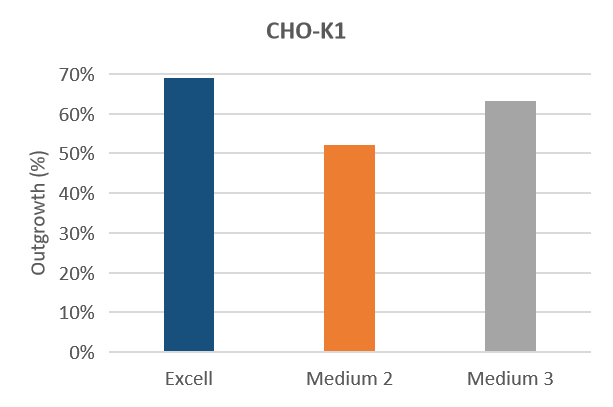
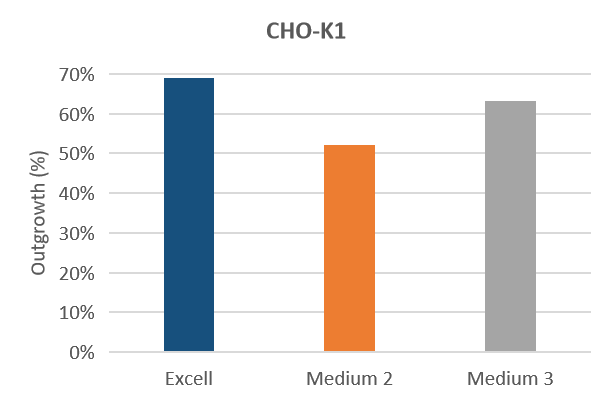
When you evaluate options, ask for data from similar processes — same clone family, same bioreactor scale. I always request a vendor’s stability data, a lot-specific COA, and a case study showing how changing feed timing affected glycosylation patterns. Also, test a small panel of cho cell culture media side-by-side in your conditions before committing. Real data beats glossy brochures every time — I learned this after a product demo that looked great on paper but failed under my lab’s shear conditions.
Three practical metrics to guide your next decision
Here are three hard metrics I use to choose solutions: 1) titer stability across three consecutive runs (target variation <8%), 2) critical quality attribute consistency (e.g., glycosylation % within spec across scale-up), 3) measurable reduction in problematic metabolites (ammonium/lactate down by at least 15%). Use these as pass/fail gates. They’re simple, objective, and they worked for me on the shop floor.
Short wrap: focus on integrated fixes, insist on real-world data, and iterate quickly — ExCellBio has supported many of my trials and can provide lot-specific information when you need it. — I still remember that March run; it changed how I evaluate media suppliers.