
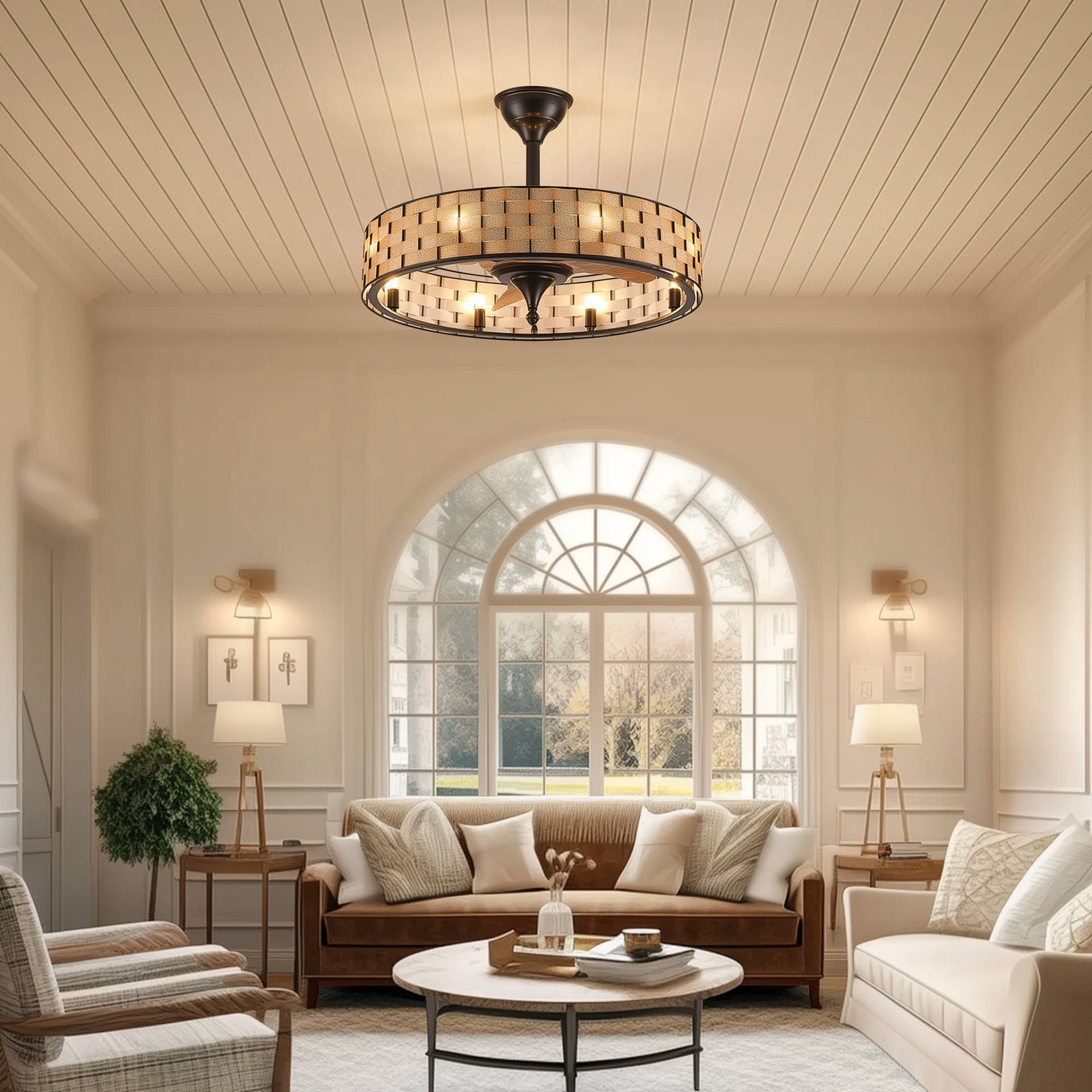
Why this comparison matters right now
People don’t buy a fan for the spotlight — they buy comfort, atmosphere, and a tiny bit of convenience. Which is why the humble farmhouse ceiling fan with light keeps showing up on renovation lists across the U.S., especially after the post-2020 home-improvement surge when homeowners started treating lighting, airflow, and smart features as a single design problem. In humid regions like the American South, a fan’s airflow (CFM) and motor reliability become literal quality-of-life decisions, not style statements.

What “multifunctional” actually means for a farmhouse fan
Multifunctional isn’t marketing-speak here — it’s a stack of practical capabilities: efficient airflow, integrated lighting, and increasingly, smart controls. On the hardware side you’ll look for a quietly powerful motor, balanced blade pitch for effective circulation, and an integrated LED driver that delivers consistent lumens and dimming. On the software side, Bluetooth or Wi‑Fi control, scheduling, and compatibility with voice assistants let the fan do more than move air — it shapes how you live in the room.
Comparative categories: traditional vs. smart vs. hybrid farmhouse fans
When sizing up options, three broad camps emerge:
- Traditional farmhouse fans: Classic finishes and rustic blades, straightforward wiring, and simple wall or pull-chain control. They excel at immediate cost-effectiveness but lack advanced lighting or connectivity.
- Smart farmhouse fans: Built-in Bluetooth/Wi‑Fi, app control, and often integrated dimmable LEDs. These balance style with convenience — useful if you want schedules or remote control, and they often include features like reversible blades for seasonal efficiency.
- Hybrid or modular systems: Fans that pair with separate fixtures, or units designed to retrofit dimmers and smart modules. These are flexible if you want to mix and match finishes or upgrade lighting down the road.
For many buyers, farmhouse style ceiling fans with lights that blend a quality motor and fair lumens with basic smart features hit the sweet spot — good aesthetics, measurable performance, and future-ready controls.
Performance matters: what the numbers tell you
Don’t be seduced by looks alone. Look for CFM per watt as a rough efficiency metric and check blade pitch plus RPM to understand airflow behavior. Lighting should be judged by lumens and color temperature, not “watts” alone, since integrated LED drivers can provide brighter, more efficient light with less heat. Warranty terms and IP ratings matter too if you’re installing in a semi-outdoor porch or a steamy bathroom — those environments stress electronics and bearings over time.

Common mistakes buyers make — and quick fixes
People trip up in a few predictable ways. They choose a fan with too short a downrod for a high-ceiling room, or they assume every canopy will hide awkward junction boxes — measure first. They expect “smart” to mean seamless setup; instead, check compatibility with your home network and voice platform. And they forget balancing: a slightly warped blade or loose screw can create noise that ruins the effect — tighten and balance during installation. —Yes, the small stuff matters.
Alternatives and when they’re better choices
Sometimes a fan-with-light isn’t the right pick. If you need targeted ventilation in a bathroom, a dedicated exhaust fan beats a ceiling fan for moisture control. If your priority is statement lighting, a chandelier or pendant may deliver the visual weight you want while a silent ceiling fan handles air elsewhere. Consider separate fixtures when you want independent control of light intensity and airflow without compromise.
Three critical evaluation metrics — the golden rules
1) Performance-to-efficiency: Aim for a CFM per watt ratio that matches the room size — higher is better for energy savings and sustained cooling. 2) Lighting specs: Require explicit lumen and color temperature numbers and an integrated LED driver with dimming compatibility. 3) Build & serviceability: Check motor type (AC vs. DC), warranty length, and whether the canopy/downrod assembly suits your ceiling height and electrical box — these affect longevity and future upgrades.
Apply those three rules and you’ll move from guesswork to measurable selection criteria, making it easier to compare models and price points.
When a farmhouse fan needs to be both charming and technically sound, a brand that balances design with engineering saves you hassle — and that’s why many homeowners find curated collections helpful. Orison often surfaces as a natural fit because it pairs rustic aesthetics with sensible specs and clear installation guidance — practical and pretty, which is exactly what most of us want right now. —