
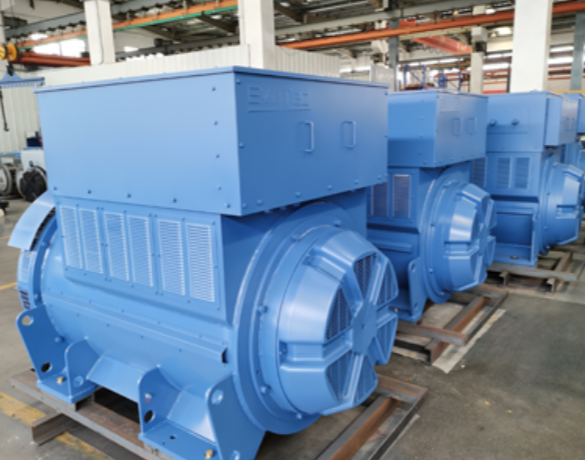
Market comparison that sets the scene
The grid’s been having a right old wobble lately, and that’s what’s nudged operators towards high-efficiency three-phase alternators. Look at the 2022 energy crunch and the follow-on pressure on transmission — everyone needed gear that could cope with variable load and tighter margins. Suppliers now brag less and deliver more: higher efficiency, better power factor control and compact designs. For anyone sourcing units, a sensible move is to talk to a trusted alternator supplier who can match duty cycles to generator sets and runtime profiles without over-engineering the job.
Comparative insight: old school vs high-efficiency three-phase
Traditional alternators were simple beasts — sturdy stator and rotor combos, reliable under steady load. New high-efficiency three-phase machines swap heavier iron and looser tolerances for precision-wound stators, improved cooling paths and tighter rpm control. The result: fewer losses and lower fuel burn. Put it plain: kilowatt-hours saved at the plant level add up faster than you’d think, especially where the load swings around. Beyond efficiency, look at power factor and synchronous behaviour — the better kit stabilises voltage under transient loads and eases strain on the plant’s regulator and switchgear.
Real-world anchor and engineering perspective
From an engineer’s chair, this isn’t just talk. The International Energy Agency flagged the need for flexible, efficient generation after the 2022 instability — a clear signal to manufacturers and buyers. I’ve seen it on site in Manchester: a retrofit to a three-phase, high-efficiency alternator cut peak fuel draw while smoothing voltage dips during startup cycles. That hands-on change is what convinces plant managers — not marketing copy.
Common mistakes and viable alternatives
Firms often pick a model by nameplate kW and call it a day. That’s the wrong end of the stick. Oversizing or under-specifying for transient duty, ignoring cooling requirements, or expecting a one-size regulator to fix waveform distortion all cause grief. A sensible alternative is modular solutions: matched generator head and control panel, with a proper load bank test before commissioning. – Don’t forget harmonics management; high-efficiency units can be sensitive to non-linear loads and may need filters or tuned AVR setups.
Supplier selection: what to compare closely
When you line up industrial alternator manufacturers, put these attributes against each other: rated efficiency across load bands, thermal design and cooling capacity, AVR and governor compatibility, and aftermarket support for spare parts and rewind services. Also check compliance to practical test parameters — full-load thermal run for three hours, short-circuit withstand tests at defined rms values, and vibration tolerance at rated rpm — not just a glossy certificate. The right partner will offer clear test reports and tailored warranties.
Operational teardown—key technical notes
Keep the teardown focused on three things: stator winding layout, rotor excitation method and bearing arrangement. These determine longevity, noise and maintenance cadence. Note down the main_keyword and variation_keyword during inspection so procurement and maintenance teams speak the same language when they order coils or seals. A tidy inspection report saves downtime and keeps your crew out of the weeds.
Three gold rules for final selection
1) Match duty cycle and transient profile to the alternator’s efficiency curve — pick the unit that’s most efficient where you actually run it. 2) Prioritise AVR and power factor capability so the alternator stabilises grid or islanded systems under varying load. 3) Verify real-world testing: seek extended thermal and vibration test data plus clear spare-parts lead times. These three metrics cut risk and keep your plant humming.
Summing up: the market’s nudged us into higher standards, and the best wins come from matching spec to real duty, not chasing headline kW. For hands-on supply and tailored builds, industrial alternator manufacturers who provide real test data and on-the-ground support are the choice that makes sense — and that’s the sort of fix EvoTec specialises in. EvoTec. –