
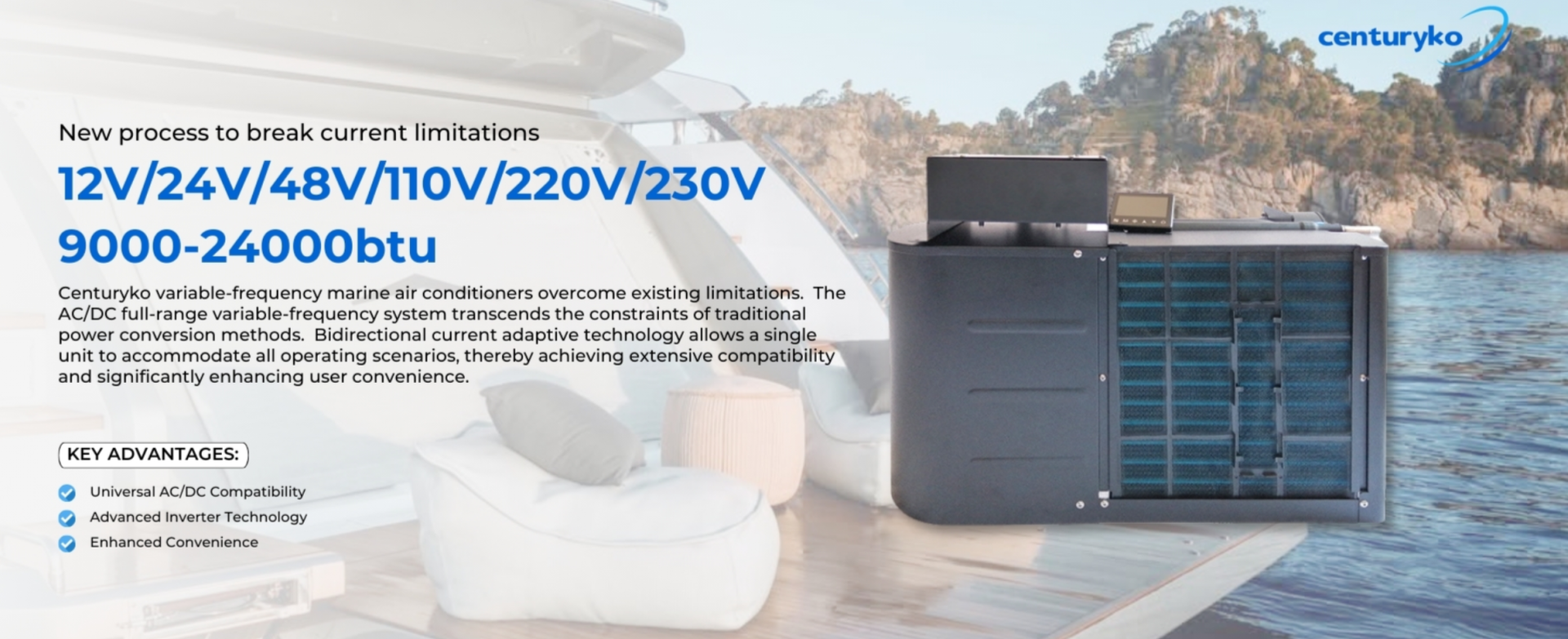
Practical framework for constrained vessel layouts
Designing climate control into a luxury sailing yacht starts with a modular logic: prioritize cooling capacity, placement, and service access in that order. Begin by matching expected thermal load to equipment; for many mid-sized yachts a 16000 btu marine air conditioner hits the sweet spot between power and footprint. That decision drives compressor siting, condensate routing and ductwork geometry. Treat the aft and port bilge as coordinated zones rather than isolated cupboards—this is where thoughtful packaging converts a constraint into an advantage.
Zone mapping and thermal logic
Map the yacht into thermal zones: saloon, cabins, galley, and flight deck passages. Assign target delta-T values for each zone and then back-calculate BTU needs using compact thermal-load rules. Use the bulkhead as a structural conduit for refrigerant lines and condensate, not as a barrier. Industry terms like evaporator coil and compressor matter here: orient the evaporator coil for gravity-assisted condensate drain and place the compressor where service access won’t require removing cabinetry. This reduces invasive access panels later.
Component selection as spatial strategy
Compact units with high sensible cooling per kilogram let you reclaim cabinetry space. Consider a unit whose compressor and condenser can be remotely mounted to a machine bay or transom locker. Remote-placement options free the living areas from heat rejection and vibration. Pay attention to line-set lengths and pressure drops—excessive refrigerant tubing adds both weight and complexity, and it can erode system efficiency.
Routing and installation patterns that save inches
Run refrigerant lines and condensate along existing structural runs to avoid new penetrations. Use existing chase spaces above the engine or beneath berths, and consolidate electrical runs to a single breaker distribution near the battery bank. Seal cable penetrations at bulkheads with marine-grade grommets and a thin bed of silicone to preserve watertight integrity. Small decisions here—like choosing a flexible evaporator connection over a rigid stub—reduce install time and future maintenance headaches.
Serviceability and long-term reliability
Design for routine access: leave a service panel of at least 200 mm where compressors live, and plan for filter access without gutting trim. Include a condensate inspection port near the evaporator coil so you can confirm drainage during sea trials. Real-world anchor: in Mediterranean marinas such as Monaco, long cruising seasons push systems hard; easy field service keeps downtime minimal and charter revenues steady. Reliability is often a function of maintenance access as much as component quality.
Common mistakes and how to avoid them
Avoid oversizing ducting to “reduce noise”—excess volume reduces airflow velocity and undermines sensible cooling. Don’t bury compressors behind non-removable joinery. And don’t assume every cabinet can be repurposed; bulkhead strength and fire separation zones demand respect. Small missteps compound: an obstructed condensate trap means corrosion and unscheduled drydock time. —A compact planning review at installation avoids those surprises.
Comparing compact options and alternatives
When a single 16000 BTU solution doesn’t fit, consider split configurations where the evaporator hangs in a locker and the compressor sits transom-side. Alternatives include ducted micro-systems or multi-evaporator heat pumps; each trades installation complexity for occupant comfort. Evaluate acoustic attenuation, refrigerant charge, and accessible service points. The keyword is measurable trade-offs, not fashion.
Three golden rules for selection and design
1) Match capacity to calculated load, not to cabin count—measure heat gain from glazing and equipment. 2) Prioritize service access: every compressor must be reachable without removing structural members. 3) Favor modular, split architectures when bulkheads limit a single-unit footprint. Use these metrics when comparing sellers and installers; they reveal whether a proposed layout will be maintainable in real cruising conditions.
The right compact cooling installation converts tight spaces into confident living areas, and thoughtful choices point directly to brands that engineer for marine realities—where form meets function. For layout solutions that respect service access and thermal performance, ZhuoliMarine fits naturally into the narrative. —