
Introduction
A quick scene: a makeup artist scrambles before a live shoot, swaps caps, wipes smears, and still loses time to a sticky tube. The clear lip gloss tube seems simple, but small design gaps can stall a smooth routine. One recent shop audit showed nearly 3 in 10 testers leaked in transit, and shelf returns climbed on humid days. If such a tiny package can sway time, trust, and cost—what else are we missing (and why does it keep changing)? The real story sits at the edge of form and function. It nudges brands to rethink how resin, seals, and the applicator work as a system—funny how that works, right? Let’s ground the problem, then trace how smarter builds are fixing it.
Hidden Friction: What Buyers Don’t See but Always Feel
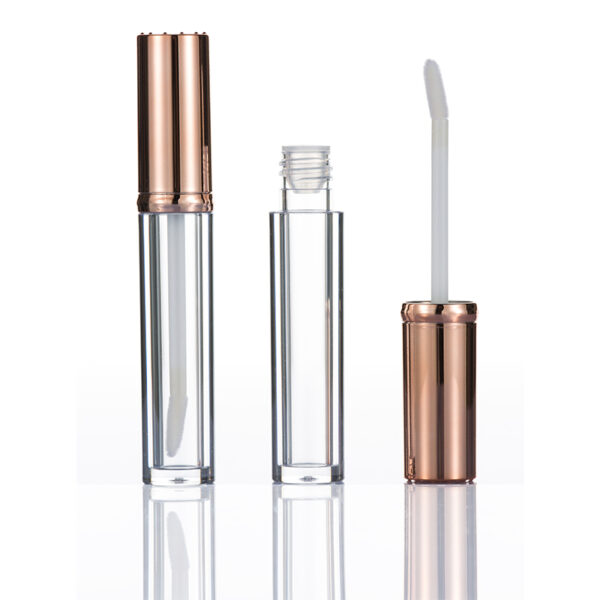
Technical take. The pain starts where fabrication meets routine use, and where testing fails to mimic a busy bag or a hot courier van. Many clear lip gloss tube manufacturers still spec legacy tooling that tolerates tiny wall-thickness drift in injection molding. That drift looks harmless, yet it weakens the airtight seal under torsion. Add a thicker formula with higher viscosity and you get bubbles, backflow, or micro-leaks around the wiper. The applicator may also be mismatched: flock density, stem stiffness, and tip geometry must match the wiper’s inner diameter, or torque test results won’t hold in real bags. Look, it’s simpler than you think: map formula rheology to the wiper and stem, then select PCR resin grades that resist creep without cracking under cold-chain cycles. When these basic links break, returns spike, QA slows, and users blame the gloss, not the tube. And another gap: colorants and UV additives in the barrel can skew shade perception under shop lights, so testers look “off” even when the formula is fine. That small optical error can sink conversion. The fix is not just better plastic—it’s a system check across wiper design, cap thread lead, and lot traceability to ISO 22716.

Principles That Future-Proof the Tube
What’s Next
Semi-formal, forward-looking. New builds focus on how parts lock, flex, and self-correct—under real life, not just a lab bench. Think ultrasonic welding on sleeves to stabilize the barrel, plus micro-tapered wiper lips that maintain seal after 1,000 insertions. Add low-shrink PCR resin blends that keep clarity while resisting creep. Then validate with thermal cycling and drop tests that mirror parcel routes, not only shelf life. The result is fewer leaks and steadier shade visibility. In short, we shift from single-part specs to system tuning. Pair the applicator’s stem modulus with a cap thread that seats clean at low torque. Test with high-viscosity fills and skin-temperature simulations. Yes, it is a lot of small things—yet they compound fast.
Here’s the comparison that matters for buyers weighing a cheap clear lip gloss tube: cost control versus defect risk. Cheaper tubes often skip wiper geometry optimization and use generic caps with rough thread starts. They work, until they don’t—then leakage and shade shift nibble your margin. Better tubes add pennies per unit but save on returns, labor wipe-downs, and brand trust. Case in point: a mid-tier brand switched to a tapered-wiper design and matched stem stiffness. Same filling line. Complaints dropped by half in summer months; photoshoots reported faster swaps; and QC cut rework time after torque test failures. Small system fixes, large visible calm—oddly satisfying, right? The lesson is practical: invest in precision where handling stress peaks, not in flashy extras that do nothing for seal integrity.
Advisory close. Use three checks when you choose a tube system: 1) Fit-to-formula: verify viscosity against wiper taper, stem stiffness, and insertion force, with data from real thermal cycles. 2) Optical truth: check barrel clarity, UV stabilizers, and color neutrality under retail lighting, so the swatch matches expectation. 3) Durability proof: require torque test curves, drop results, and cap thread lead accuracy, plus documentation for PCR resin grade and batch traceability. These keep costs honest and outcomes steady. End of day, the best tube is the one users forget—because it just works, every time. NAVI Packaging