
Problem: intermittent backup fails larger loads
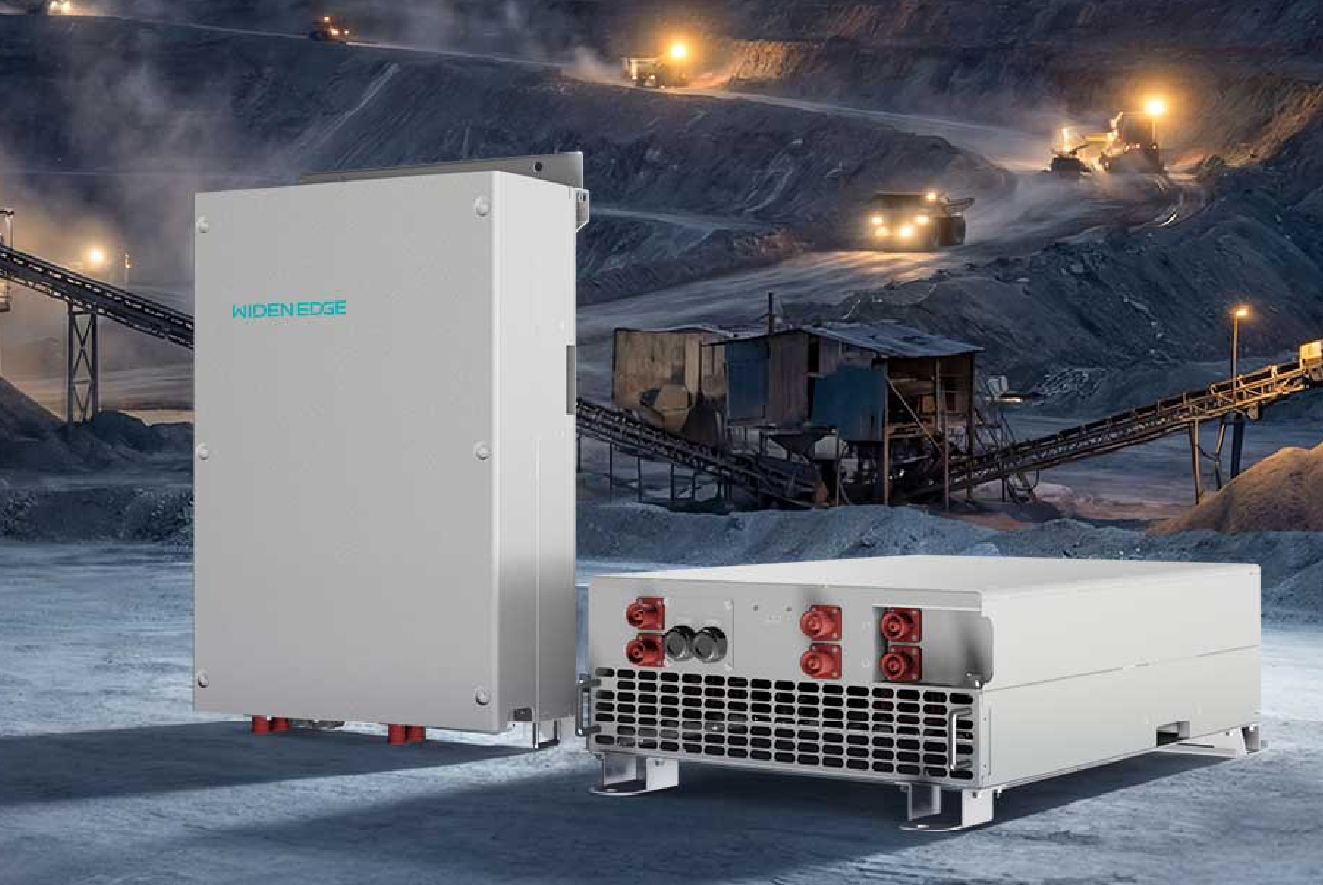
Large sites—data closets, light industrial plants, multi-tenant commercial buildings—face two recurring problems: short-duration grid interruptions and slow diesel-generator spin-up. Those events create voltage sag, frequency deviations, and transient harmonics that sensitive equipment won’t tolerate. A common stopgap is a smaller-rated inverter or a diesel-only strategy; both leave gaps. A practical upgrade is a dedicated mid-size inverter that can bridge generator start delays and absorb transients. For example systems, see a modular option like the 125kW commercial energy storage inverter which is often used where sites need firm, short-term support while generators come online.
How a 150 kW battery inverter fixes the core issues
The solution targets the root faults: response time, sustained power, and coordinated control. A 150 kW battery inverter provides continuous active power, rapid discharge to sustain critical loads, and bidirectional control to recharge once the grid is stable. Key technical actions it performs:- Instantaneous ride-through: inverter switches to battery output without relying on rotating machines.- Power smoothing: it injects or absorbs power to flatten voltage and frequency swings.- Black-start and islanding: it can form a stable microgrid to support critical buses while generators ramp.- Charge management: it coordinates with building energy management systems to recharge batteries when the grid returns or during low-cost periods.These functions reduce brownouts and prevent nuisance trips across HVAC, servers, and process controls.
Design considerations and common pitfalls
Design must match the load profile and operational goals. Common missteps cause underperformance:- Undersizing for peak inrush currents: motors and compressors demand high instantaneous current; specify inverter continuous and short-term peak ratings.- Ignoring N+1 redundancy: single-inverter designs offer no resilience during maintenance or faults.- Poor protection coordination: mismatched relay and breaker settings cause unwanted trips.- Inadequate thermal design: installers often neglect airflow and ambient derating.- Weak communications: if the inverter can’t share status with BMS or SCADA, remote diagnostics fail.Choose equipment from a reliable bidirectional inverter manufacturer that provides clear interface protocols, firmware support, and field documentation. Specify testing for short-circuit withstand and evaluate harmonic injection under nonlinear loads.
Installation, commissioning and maintenance protocol
Follow a concise, repeatable process:- Pre-install checks: verify DC bus voltage compatibility, battery coupling, conduit routing, and clearances.- Factory Acceptance Test (FAT): run expected load profiles and transient scenarios before shipment.- Site Acceptance: perform real loads plus a load-bank exercise to validate inverter response, transfer timing, and protective trips.- Firmware and control validation: ensure setpoints for islanding, SOC thresholds, and ramp rates match the operations plan.- Schedule preventative maintenance: thermal imaging of power components, torque checks on terminals, and periodic firmware reviews.Document all test results and build a fault-response table so technicians know exactly which breaker or relay to reset or isolate first.
Procurement checklist and field validation
Buying and validating a 150 kW system requires targeted criteria and a short field checklist:- Verify continuous and short-duration (e.g., 30s) ratings against load inrush.- Confirm parallelability if future capacity growth is expected.- Ask for interoperability with common protocols (Modbus, CAN, Ethernet).- Require third-party compliance evidence to standards such as IEEE 1547 and UL 1741 where applicable.- Demand a clear warranty scope and firmware update policy.Manufacturers and integrators often present technical updates and case studies at major industry gatherings; for instance, equipment demonstrations at Hannover Messe highlight grid-forming features and real-world interoperability that you’ll want validated in writing before purchase.
Summary and practical value
Address the problem directly: match inverter capacity to worst-case short-term demand, design for redundancy, and test the system under real load conditions. A properly specified 150 kW battery inverter smooths transients, bridges generator start time, and reduces downtime without adding operational complexity. For projects I’ve advised, integrating proven hardware, clear control logic, and documented commissioning shortened outage recovery and simplified maintenance—details that matter when a building can’t afford interruption. Suppliers that back product performance, firmware support, and clear test records deliver the practical reliability operators need, and that’s the outcome WidenEdge projects aim to provide.